
WELCOME BONUS 300%
UP TO €2000 + 100
FREE SPINS
UP TO €2000 + 100
FREE SPINS
Home → Blackjack
Blackjack at Jack Casino: Variants, Rules and Payouts
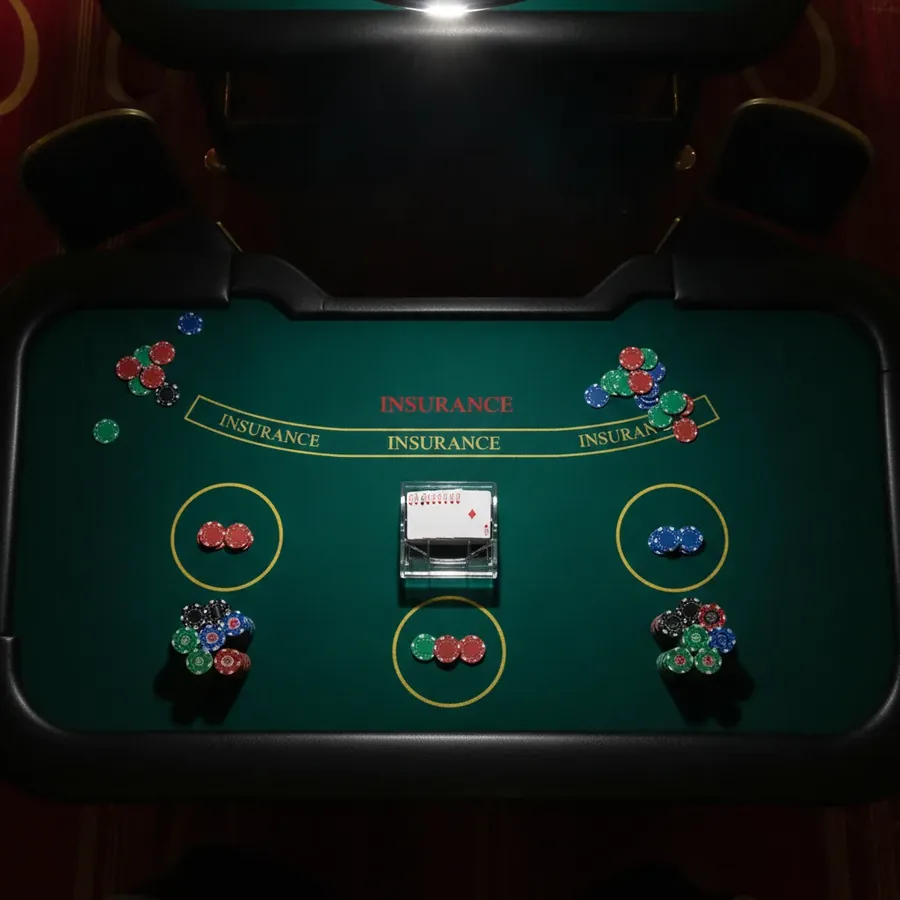
Insurance vs Even Money When You Hold Blackjack
A separate insurance side bet of up to 50% of the main stake is offered when the dealer shows an ace and pays 2:1. The house edge on this bet reaches 7.47% with six to eight decks, compared with 0.15% for single-deck classic blackjack. A €10 insurance bet therefore costs the player about €0.75 on average every time it is placed, making it a systematically poor decision under basic strategy.
Even money on a player's own blackjack is mathematically identical to taking insurance on the hand. The guaranteed win of 1:1 replaces the 3:2 payout, which would pay €15 on a €10 stake instead of €10. Since the insurance edge remains 7.47%, accepting even money gives away roughly €0.75 of expected value per €10 wagered compared with declining the offer.
Basic strategy always declines insurance except for card counters at a true count of at least +3. A single deck lowers the insurance edge to approximately 5.88%, which is still far above the 0.15% edge of the main game. The comparison shows that a 3:2 blackjack paid normally is worth more than the 2:1 insurance route in the long run.
Soft 17: Does the Dealer Hit or Stand?
A dealer hitting soft 17 adds exactly +0.22 percentage points to the house edge compared with standing on soft 17. In the six-deck game with S17, DAS, DOA and a 3:2 payout, the house edge is 0.46% with basic strategy. Changing only that one rule lifts the edge to 0.68%, which is a meaningful difference for players who play long sessions.
The most player-friendly rule set in the comparison is the Liberal Vegas Strip variant with S17, DAS, resplit and late surrender at a 0.28% house edge. Against that benchmark, an H17 table costs an extra €0.22 per €100 staked before any other rule is considered. That gap is larger than the improvement from resplitting aces alone, which is worth −0.08 percentage points.
A 6:5 payout on a six-deck game raises the edge by +1.39 percentage points, so the H17 penalty of +0.22 percentage points is modest by comparison but still avoidable. On €1,000 of total blackjack stakes, H17 costs the player €2.20 more on average than the same game with the dealer standing. Players comparing tables should treat S17 as the baseline and view H17 as a downgrade.
Calling Late Surrender Correctly in Three Steps
Late surrender lets the player give up the hand after the dealer has checked for blackjack and lose only half the stake. The rule improves RTP by about 0.08 percentage points, which is worth €0.08 per €100 staked. Early surrender would be worth far more at up to −0.6 percentage points, but it is extremely rare and should not be expected at most tables.
The correct registration of late surrender begins with recognising that 50% of the stake is returned and 50% is lost. A €20 bet therefore returns €10 to the player's balance. This half-stake outcome applies only after the dealer confirms no blackjack; if the dealer has blackjack, the whole initial bet loses before surrender can be used.
The third step is to apply the rule only in the specific hand totals where basic strategy calls for surrender, typically hard 16 against a dealer ten or ace. Misusing surrender on strong hands costs more than the 0.08 percentage point RTP gain. The Liberal Vegas Strip variant includes late surrender alongside S17, DAS and resplit to reach a 0.28% house edge.
Six to Eight Decks in the Shoe
Moving from eight decks to six decks improves the player's edge by about 0.02 percentage points when all other rules stay unchanged. The six-deck game with S17, DAS, DOA and 3:2 pays a 99.54% RTP and keeps a 0.46% house edge. An eight-deck version would sit at approximately 0.48% edge, so the deck reduction is a small but real gain.
A single deck lowers the house edge by about −0.48 percentage points compared with eight decks, reaching 99.85% RTP and a 0.15% house edge with classic rules and a 3:2 payout. However, casinos often offset the single-deck advantage by switching blackjack payouts from 3:2 to 6:5. That change adds +1.39 percentage points to the edge, wiping out the deck-count benefit several times over.
On €1,000 staked, the six-deck edge of 0.46% costs €4.60 on average, while a single deck at 0.15% costs €1.50. The eight-deck penalty of 0.02 percentage points is worth only €0.20 per €1,000, far less than the payout or dealer-rule changes. Live tables at Jack Casino range from Evolution's Lightning Blackjack at 99.56% RTP to Playtech's Quantum Blackjack Plus Live at 99.57% with optimal strategy.
Blackjack variants at a glance
| Variant | Payout | House edge | Rule | RTP |
|---|---|---|---|---|
| Blackjack 6 decks, S17, DAS, DOA, 3:2 payout, basic strategy | Blackjack 3:2, regular win 1:1, insurance 2:1 | 0.46% | Dealer stands on soft 17; double down on any first two cards; doubling after a split allowed; no surrender. Basic strategy is required to reach this figure | 99.54% |
| Blackjack Surrender (late surrender) – rule effect | 50% of the stake returned | −0.08 percentage points | The player gives up the hand after the dealer has checked for blackjack and loses half the stake. Improves RTP by about 0.08 percentage points. Early surrender is worth much more (up to −0.6 percentage points) but is extremely rare. | n/a (rule modifier) |
| Blackjack Single deck, classic rules, 3:2 | Blackjack 3:2, win 1:1 | 0.15% | Fewer decks = lower edge; one deck gives about −0.48 percentage points compared with 8 decks. Often offset by a 6:5 payout. | 99.85% |
| Blackjack Insurance (6–8 decks) | Insurance 2:1 | 7.47% | Separate side bet of up to 50% of the main bet when the dealer shows an ace. Basic strategy ALWAYS declines it (except for card counters at a true count ≥ +3). With a single deck the edge is ≈ 5.88% | 92.53% |
| Blackjack 6:5 payout instead of 3:2 (6 decks) | Blackjack 6:5, win 1:1 | 1.85% | Replacing 3:2 with 6:5 adds exactly +1.39 percentage points to the casino's edge – more than any other rule change. On a €10 bet a blackjack pays €12 instead of €15. | 98.15% |
| Blackjack Liberal Vegas Strip (liberal rules, 3:2) | Blackjack 3:2, win 1:1 | 0.28% | The most player-friendly rule set: S17 + DAS + resplit + late surrender. Standard deviation 1.15 | 99.72% |
Splitting at a Live Table, Step by Step
Split rules in the blackjack variants on offer allow up to four hands from one original hand, doubling the stake with a single card per new hand; split aces usually receive one card each. Resplitting aces improves the return by 0.08 percentage points, while doubling after a split adds about 0.14 percentage points to the player's side.
At the live tables, Lightning Blackjack from Evolution carries a bet range of 1 EUR to 2,500 EUR and an RTP of 99.56%, while Quantum Blackjack Plus Live from Playtech spans 1 EUR to 5,000 EUR with an RTP of 99.57% under optimal strategy. Those return figures sit above the 99.54% of a six-deck shoe game with dealer standing on soft 17, doubling after a split and no surrender.
A player who splits a pair of eights at a 1 EUR table and then doubles each resulting hand commits 4 EUR across the two hands before any card is dealt. On the six-deck game at 99.54%, that 4 EUR of action costs roughly 0.02 EUR on average; the same split on the 99.72% liberal Vegas Strip rule set costs slightly less. Multipliers in Quantum Blackjack Plus Live reach 1,000x on three-card combinations worth 21 points.
Split, Double Down and Surrender by the Numbers
Late surrender lets the player give up a hand after the dealer has checked for blackjack and lose half the stake, improving the return by about 0.08 percentage points. Early surrender is worth up to 0.6 percentage points but is extremely rare. On a 100 EUR hand, late surrender returns 50 EUR and removes the risk of a full loss.
Dealer hitting soft 17 lowers the return by 0.22 percentage points, the single largest rule penalty after the payout change. Doubling after a split adds about 0.14 percentage points, resplitting aces 0.08 percentage points, and moving from eight decks to six adds roughly 0.02 percentage points. Insurance is the costliest side bet: a 7.47% house edge, against 0.28% for the liberal Vegas Strip rule set.
The house edge is the average share of each stake the casino keeps, so 100 EUR staked on the six-deck, stand-on-soft-17 game at 0.46% costs about 0.46 EUR per 100 EUR wagered, while the same 100 EUR on the 6:5 payout game at 1.85% costs 1.85 EUR. A basic-strategy player on the 99.85% single-deck classic game keeps the most, at 0.15%.
Clicked Too Late? The Hand Stands Automatically
Late surrender can only be taken after the dealer has checked for blackjack, and the decision window closes once that check is complete. Miss it and the hand is held to its natural conclusion. The cost of that missed option is about 0.08 percentage points of return, which on 100 EUR of stakes amounts to roughly 0.08 EUR.
Insurance is the clearest case of a decision that must be declined on time. The side bet allows up to 50% of the main bet when the dealer shows an ace, pays 2:1, and carries a 7.47% house edge over six to eight decks; on a 10 EUR main bet the maximum 5 EUR insurance stake gives the casino an average 0.37 EUR. Basic strategy always declines it except for card counters at a true count of +3 or higher.
A player who always takes insurance on a 10 EUR bet at 7.47% loses about 0.37 EUR per 5 EUR side stake, against 0.03 EUR per 10 EUR on the 0.28% liberal Vegas Strip game. The single-deck insurance edge of about 5.88% is lower but still positive for the casino.
Double Down or Just Hit on 11
Doubling down doubles the stake and draws exactly one card, so an 11 against a dealer's low card commits 2 EUR on a 1 EUR base bet for a single additional card. Hitting keeps the stake at 1 EUR but allows further cards. The rule modifiers show doubling after a split is worth about 0.14 percentage points of return across the shoe.
On the six-deck, stand-on-soft-17, doubling-after-split game at 99.54%, a basic-strategy player doubling on 11 against a six faces a 0.46% house edge on the doubled 2 EUR. The same player on Blackjack Liberal Vegas Strip at 99.72% faces 0.28%. Standard deviation there is 1.15, so short runs swing widely around those averages.
A 100 EUR double down at the six-deck game costs about 0.46 EUR in expected terms, while the same 100 EUR left as a single hit costs about 0.23 EUR. Blackjack Party from Evolution, with two hosts and a bet range of 1.00 EUR to 1,000 EUR, uses the same underlying 3:2 structure for natural blackjacks.
Ignoring the Basic Strategy Chart: 1 Percent Wasted
Blackjack 6:5 instead of 3:2 adds exactly 1.39 percentage points to the casino's edge, more than any other single rule change. A 10 EUR blackjack pays 12 EUR at 6:5 rather than 15 EUR at 3:2. That three-euro gap on every natural blackjack compounds across a session and dwarfs every other deviation discussed here.
The 6:5 payout game returns 98.15% against 99.72% for Blackjack Liberal Vegas Strip, a gap of 1.57 percentage points. On 1,000 EUR of stakes, that difference is 15.70 EUR versus 2.80 EUR in expected cost. Insurance, at 7.47% over six to eight decks, is even worse for the player than a 6:5 payout.
A basic-strategy player on the six-deck, stand-on-soft-17, doubling-after-split game reaches 99.54%, but only with correct play; the same shoe played by instinct falls toward the 6:5 level. The single-deck classic game at 99.85% is the strongest figure here, and the 300% welcome bonus up to €2,000 plus 100 free spins is the only additional value on this page.
Surrender or Play On With 16 Against a 10
Late surrender lets the player give up the hand after the dealer has checked for blackjack and lose half the stake, which improves the return by about 0.08 percentage points and cuts the house edge to 0.46% before that modifier is applied. The same figure belongs to the six-deck, S17, DAS, DOA game with a 3:2 payout, where basic strategy is required to reach 99.54%.
Against that stands the option of playing the hand out, which is the default in the six-deck game with a 3:2 payout, insurance at 2:1 and a regular win at 1:1. A 100 EUR stake played out keeps the full 0.46% house edge working on the whole amount, so the average cost stays at 0.46 EUR per hand, while a surrendered hand returns 50 EUR of the 100 EUR stake immediately.
Early surrender is worth much more, up to 0.6 percentage points, but it is extremely rare, so the realistic choice sits between late surrender and playing out. Only the late version applies here: it lowers the house edge by 0.08 percentage points, which on 100 EUR staked per round is roughly 0.08 EUR saved per hand over the long run, not a guarantee for one session.
Which Rule Variants the Software Shows
The six-deck game carries S17, DAS, DOA and a 3:2 payout, and its RTP of 99.54% assumes basic strategy; the same rules with the dealer hitting soft 17 would lose 0.22 percentage points. A single deck with classic rules reaches 99.85% and a house edge of 0.15%, because one deck is about 0.48 percentage points better than eight decks.
Liberal Vegas Strip rules combine S17, DAS, resplit and late surrender for an RTP of 99.72% and a house edge of 0.28%, with a standard deviation of 1.15. Doubling after a split alone is worth about 0.14 percentage points, resplitting aces 0.08 percentage points, and moving from 8 decks to 6 about 0.02 percentage points, so each rule visibly shifts the return.
The payout line matters more than any single rule: replacing 3:2 with 6:5 on a six-deck game drops the RTP to 98.15% and lifts the house edge to 1.85%, a change of exactly 1.39 percentage points. On a 10 EUR bet a blackjack pays 12 EUR instead of 15 EUR, so the variant shown by the software decides whether the player collects the full 3:2 amount or the reduced 6:5 one.
The Insurance Mistake: 7% Extra House Edge
Insurance is a separate side bet of up to 50% of the main bet, placed when the dealer shows an ace, and it pays 2:1. On six to eight decks it returns 92.53% and carries a house edge of 7.47%, which is far above the 0.46% of the underlying six-deck blackjack game with a 3:2 payout.
Basic strategy always declines insurance, with the only exception being card counters at a true count of +3 or higher. With a single deck the edge drops to about 5.88%, still many times the 0.28% house edge of Liberal Vegas Strip rules, so the side bet remains expensive across every deck count shown here.
The arithmetic is direct: a 10 EUR insurance bet at 2:1 returns 20 EUR when it wins, but the 7.47% edge means 100 EUR of insurance stakes cost about 7.47 EUR on average. Compared with the 1.85% house edge of the 6:5 payout variant, insurance is roughly four times as costly, which is why it is treated as an error rather than a play.
Bet Two Percent of Your Bankroll per Hand
A flat stake of 2% of the bankroll per hand keeps the exposure steady across the variants shown, from the 0.15% house edge of single-deck classic blackjack to the 1.85% edge of the six-deck 6:5 game. On a 500 EUR bankroll that is 10 EUR per hand, which at the 3:2 payout returns 15 EUR on a blackjack.
The same 10 EUR stake costs about 0.05 EUR per hand at a 0.46% house edge and about 0.19 EUR at 1.85%, so the rule set, not the stake size, drives the loss rate. Over 100 hands the difference is roughly 5 EUR against 19 EUR, which shows how quickly the 6:5 payout variant erodes a bankroll.
At the live tables the bet range starts at 1 EUR on Lightning Blackjack and Quantum Blackjack Plus Live, and at 1.00 EUR on Blackjack Party, so a 2% rule fits a bankroll from about 50 EUR upward. Lightning Blackjack returns 99.56% and Quantum Blackjack Plus Live 99.57% with optimal strategy, both above the 99.54% of the six-deck game.
Side Bets Raise the House Edge to 5%
Insurance is the clearest example: at 92.53% RTP on six to eight decks it leaves a house edge of 7.47%, against 0.46% for the six-deck blackjack game with S17, DAS, DOA and a 3:2 payout. On a single deck the insurance edge is about 5.88%, still far above the 0.15% of single-deck classic blackjack.
The step from the main game to the side bet is measurable: 0.46% becomes 7.47%, a difference of 7.01 percentage points, while the 6:5 payout variant sits at 1.85%. A player who adds insurance to a 100 EUR main bet of up to 50 EUR in side stake raises the average cost per round well beyond the main game alone.
Their RTP figures of 99.56% and 99.57% with optimal strategy stay close to the 99.54% of the standard six-deck game, which is where the cost comparison ends.
Contact
Live - online chat
Banking









Providers












Jack Casino 2026